
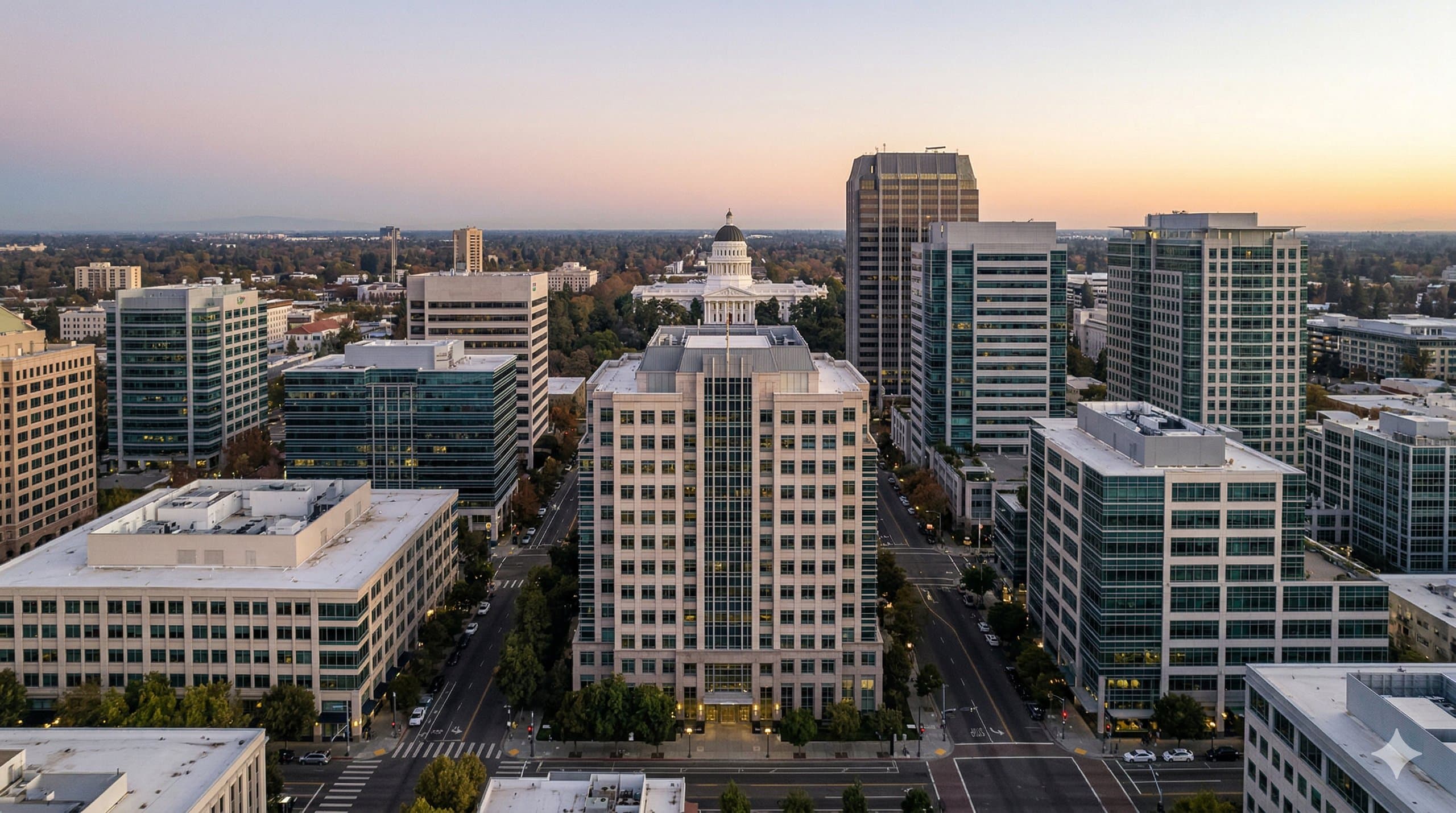
The dynamics of the Sacramento Office market are shifting rapidly, and our newly released Q4 2025 figures provide critical visibility for investment strategies moving into 2026. While the headline vacancy rate of 18.7% and negative absorption reflect the ongoing national trend of rightsizing, these numbers do not capture the whole story for capital market opportunities in Northern California.
What this means for my clients is a call for a strategic approach rather than reaction. In a market categorized by pricing discovery, our extensive buyer network and deep-dive ARGUS underwriting analysis remain your greatest tools. Whether you are looking to dispose of core assets at maximum value or identify distressed opportunities with sophisticated repositioning potential, these Q4 figures serve as the data-driven foundation of our discussion.
Related Insight(s)
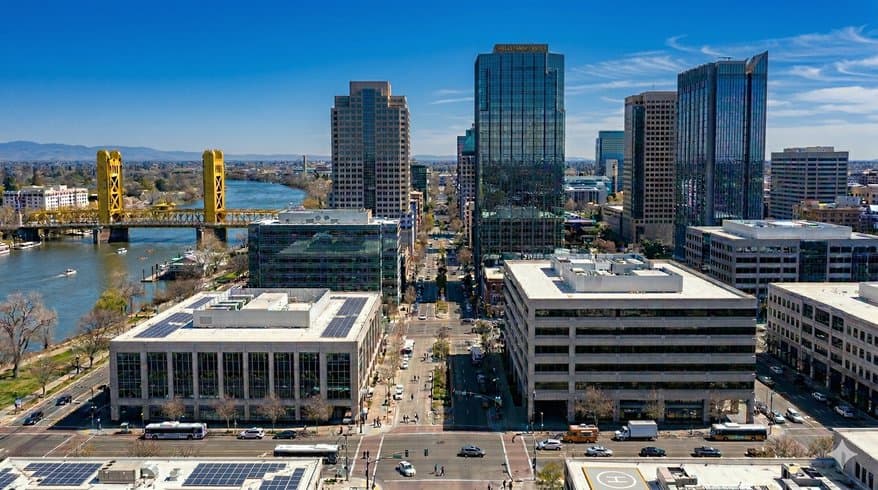
Sacramento Office Is Finding Its Floor
I've been watching the Sacramento office market closely for a long time, and what I'm seeing right now is something I'd characterize as painful-but-progressing. The numbers in CBRE's Q4 2025 Sacramento Office Figures aren't pretty on the surface — an overall vacancy rate of 18.7%, continued negative absorption — but if you understand the market context, there's a more nuanced story worth paying attention to. The dominant driver of vacancy here isn't weak private-sector demand. It's the State of California. Over the past two years, the state has been consolidating into newly constructed, state-owned buildings and letting large legacy leases expire. That has added millions of square feet to an already elevated-vacancy market. It's a structural correction, not a market collapse. And critically, that correction is now largely running its course. Here's what I'm focused on: construction activity has nearly stopped. There's barely 200,000 square feet under construction in the entire Sacramento market right now — well below the historical average of 1.3 million square feet. When you combine a dramatic pullback in new supply with the state's consolidation cycle winding down, the setup for gradual stabilization becomes more plausible. This is exactly the kind of environment where patient, well-positioned sellers can still execute, and where disciplined buyers can acquire quality assets at a meaningful discount to replacement cost. I've also been watching the downtown submarket specifically. A downtown Sacramento office building that sold for $28 million back in 2016 changed hands again in Q4 — at a lower absolute price, but at the highest price per square foot downtown has seen since 2022. That tells me there's still a pricing floor forming, and that institutional buyers recognize the value when they see it. Sublease inventory has also dropped nearly 50% from its 2023 peak. That matters because sublease space has historically been the most visible indicator of market stress. Its retreat is a genuine sign that occupier-level distress has subsided. For my clients who own Sacramento office assets, the conversation I'm having right now is about patience, positioning, and proper pricing. The market isn't going to snap back overnight, but the conditions for a measured recovery are assembling. I'd rather have this conversation now — before the crowd arrives — than after the window has narrowed.

Capital Is Coming Back to Commercial Real Estate
There's a number from CBRE's Q4 2025 U.S. Capital Markets report that I keep coming back to: $171.6 billion in U.S. commercial real estate investment volume in a single quarter — up 29% year-over-year. For the full year, total investment came in at $499 billion, a 22% increase over 2024. Those are not recovery numbers. Those are acceleration numbers. I've been in investment sales long enough to recognize the difference between a market that's technically improving and one where capital has actually re-committed. What we saw across 2025, and what crystallized in Q4, is the latter. The lending environment improved materially. Loan-to-value ratios moved up. Alternative lenders, banks, and life companies are all participating at healthy levels. The CBRE Lending Momentum Index rose meaningfully year-over-year. These are the conditions that allow transactions to close — not just the conditions where buyers and sellers agree in principle but can't get to the finish line. For my clients in Northern California, this matters in a very direct way. Sacramento has historically lagged gateway markets in investment volume cycles — we feel the recovery later, but we also tend to hold value more durably. What the national data is telling us is that the capital rotation has already happened at the institutional level. The question now is where private and regional investors are going to follow. I've also been watching the lending side closely. The fact that LTV ratios are rising tells me lenders have more confidence in asset valuations than they did even six months ago. When lenders are willing to lend more against the same asset, that's a pricing signal. It reflects growing consensus that we're past the bottom of the pricing correction cycle. Private buyers led Q4 activity nationally at $92 billion — the largest cohort by far — which is exactly the buyer universe I serve every day. These are family offices, private equity platforms, 1031 exchange buyers, and regional investors who are hungry for quality assets in markets they understand. My job is to put the right assets in front of that capital. If you're an owner who's been waiting for the market to turn before having a conversation about timing your sale, that conversation is overdue.